Prevent Project
What’s your name and job title?
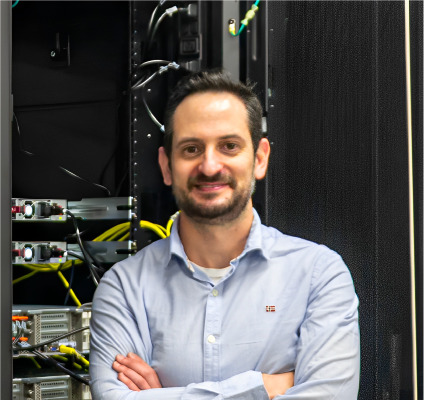
My name is Felipe Gil-Castiñeira. I’m professor at the University of Vigo, researcher at the atlanTTic Research Center for Telecommunication Technologies, and responsible of the 5G laboratory.
Tell us a few words about your background:
I received my M.Sc. and Ph.D. degrees in Telecommunication Engineering from the University of Vigo in 2002 and 2007, respectively. Between 2014 and September 2016, I served as the head of the iNetS area in the Galician Research and Development Centre in Advanced Telecommunications. Previously, in 2010, I was a visiting researcher at the Nokia Research Centre in Palo Alto, California.
My interests include wireless communication and core network technologies, multimedia communications, embedded systems, ubiquitous computing, and the Internet of Things. I have published over 120 papers in international journals and conference proceedings, and I have led several national and international R&D projects. I hold two patents in mobile communications and am the co-founder of a university spin-off.
What organisation do you work for?
I work at the Universidade de Vigo.
What does your organisation do?
The Universidade de Vigo is a public university in Galicia, in the north-west of Spain. It is known for its strong focus on science, technology, and engineering, but it also offers a wide range of programs in the humanities, social sciences, business, and legal studies.
What is your role in the PREVENT project? What are you currently working on?
At the University of Vigo, we are responsible for developing high-quality training materials and pilot-testing an innovative methodology. Our primary focus lies in technologies such as embedded systems, wireless communications, and artificial intelligence. Additionally, we have engaged with key stakeholders in the field of disaster management to discuss the content and objectives of the initiative.
Why is being part of the PREVENT project important to you?
Participating in the PREVENT project is highly relevant to my work as a telecommunications engineer and university professor, as it enables me to apply my expertise in embedded systems, wireless communications, and artificial intelligence to the socially critical field of disaster prevention and management. This involvement not only supports the development and dissemination of innovative technological solutions that can enhance emergency response and save lives, but also raises awareness among students about the significance of natural disasters and the importance of effective risk management. Moreover, it enriches my teaching by incorporating practical, interdisciplinary experiences into the classroom, better preparing students to tackle global challenges with both technical proficiency and ethical responsibility.
How do you like to spend your free time?
I enjoy reading, playing squash, traveling, and flying drones in my free time.